Why Every Author Needs a Media Kit (Even If You're Just Starting Out)
A media kit opens doors to podcast interviews, blog features, and event invitations. Here's why you need one — and what to include.
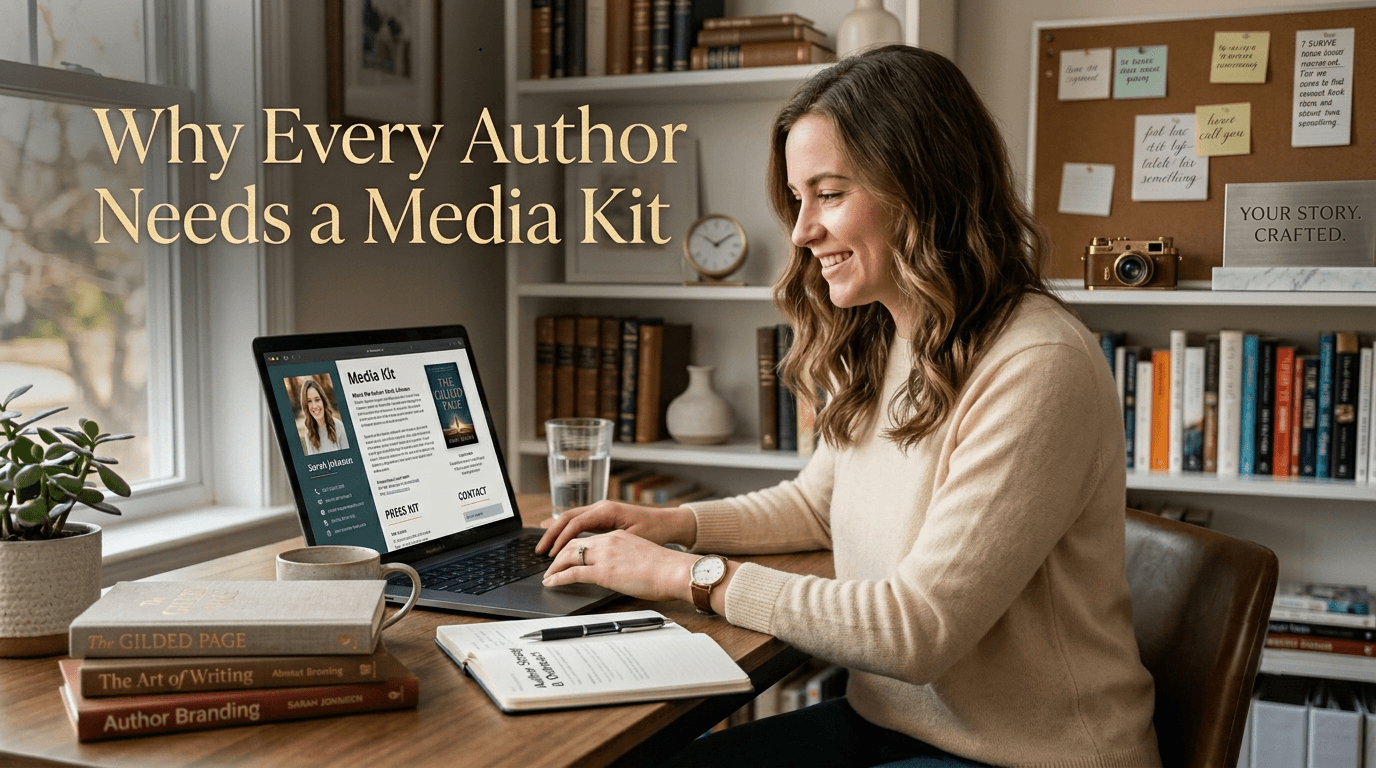
You just got an email from a podcast host who wants to interview you about your new book. They ask: "Can you send your media kit?" If your answer is "What's a media kit?" — you're about to lose an opportunity.
A media kit (or press kit) is a curated package of your author assets: bio, headshot, book covers, genre info, and contact details. It's the professional package that makes it easy for anyone — podcasters, bloggers, event organizers, journalists — to feature you.
Why It Matters for New Authors
You don't need to be a bestseller to benefit from a media kit. New authors get opportunities too — local press, small podcasts, book bloggers, library events. Having materials ready signals professionalism and makes it easy to say yes.
Here's what a media kit gives you:
Speed — When opportunity knocks, you respond in seconds, not hours
Consistency — Everyone gets the same accurate bio and high-quality headshot
Credibility — A polished kit shows you take your career seriously
Control — You decide how you're presented to the world
What to Include
At minimum, your media kit should have:
Author bio — Short (50 words) and long (200 words) versions, written in third person
Professional headshot — High resolution, well-lit, consistent with your brand
Book covers — High-res images for your published titles
Book descriptions — Short blurbs for each title
Contact information — Email and/or website contact form
Social media links — All active profiles
Keep It Updated
The biggest mistake authors make with media kits is creating one and forgetting about it. Update yours after every new book release, new headshot, or significant career milestone.
Better yet, use a platform that auto-generates your media kit from your profile data. AuthorLoft's media kit feature does exactly this — update your profile once, and your media kit is always current.
Why Every New Author Needs a Media Kit (Before Opportunities Start Rolling In)
You just got an email from a podcast host who wants to interview you about your new book. Your heart jumps. This is the moment you’ve been waiting for — someone wants to feature you, talk about your work, and introduce you to their audience.
Then they ask the question that separates prepared authors from overwhelmed ones:
“Can you send your media kit?”
If your answer is, “What’s a media kit?” — you’re not alone.
But you are about to lose an opportunity.
In today’s publishing landscape, opportunities move fast. Podcasters, bloggers, journalists, librarians, event organizers, and book reviewers all operate on tight schedules. When they reach out, they expect you to be ready. A media kit is the tool that makes you ready — instantly, professionally, and confidently.
Let’s break down exactly what a media kit is, why it matters, what it should include, and how to keep yours updated without stress.
⭐ What Exactly Is a Media Kit?
A media kit (also called a press kit) is a curated package of your essential author assets. Think of it as your professional “grab‑and‑go” folder — the one link that gives anyone everything they need to feature you accurately and attractively.
A strong media kit includes:
Your author bio (short and long versions)
A professional headshot
Your book covers
Book descriptions
Genre and audience information
Contact details
Social media links
Optional extras like interviews, awards, or press mentions
It’s not just a collection of files.
It’s your public‑facing identity, organized in a way that makes you easy to work with.
When someone wants to feature you, they don’t want to chase down your headshot, ask for your bio three times, or guess which version of your book cover is correct. They want one link that answers all their questions.
A media kit is that link.
🌱 Why Media Kits Matter — Especially for New Authors
Many new authors assume media kits are only for bestselling writers with agents, publicists, and book tours. But that couldn’t be further from the truth.
In fact, new authors often benefit the most from having a media kit ready.
Here’s why.
1. Opportunities Don’t Always Announce Themselves
You don’t need a massive platform to get attention. New authors regularly receive:
Invitations to small podcasts
Requests from book bloggers
Local newspaper interest
Library event opportunities
Guest post requests
Panel invitations
Book club features
These opportunities often come unexpectedly — and they go to the authors who respond quickly and professionally.
A media kit lets you say “yes” in seconds.
2. Professionalism Builds Trust
When you send a polished media kit, you immediately stand out.
It signals:
You’re serious about your career
You’re organized
You’re easy to work with
You understand how publicity works
Hosts and journalists remember authors who make their jobs easier.
They also remember authors who make their jobs harder.
A media kit puts you firmly in the first category.
3. Consistency Protects Your Brand
Without a media kit, every interviewer, blogger, or reviewer ends up using a different version of your bio, your headshot, or your book description.
That leads to:
Inconsistent messaging
Outdated information
Incorrect genre labels
Low‑quality images
Confusion for readers
A media kit ensures everyone presents you the same way — accurately, professionally, and on‑brand.
4. You Control the Narrative
When you don’t provide your own materials, people fill in the gaps themselves.
A media kit gives you control over:
How you’re introduced
Which photo represents you
How your book is described
What links readers click
What tone your brand conveys
You decide how the world sees you — not a rushed blogger trying to piece together information from your website.
⚡ The Four Big Benefits of Having a Media Kit Ready
Let’s break down the core advantages in simple terms.
1. Speed
When opportunity knocks, you don’t want to spend hours digging through folders, rewriting your bio, or resizing your headshot.
With a media kit, you respond instantly.
Speed matters because:
Hosts book guests quickly
Journalists work on deadlines
Bloggers move on if you’re slow
Opportunities often go to the first prepared person
A media kit makes you the easiest “yes” they’ll give all week.
2. Consistency
Your brand should feel cohesive everywhere.
A media kit ensures:
Your bio is always accurate
Your headshot is always high‑quality
Your book covers are always the correct versions
Your genre and themes are always described the same way
Consistency builds recognition — and recognition builds trust.
3. Credibility
A polished media kit instantly elevates your professionalism.
It tells people:
You take your writing career seriously
You understand how publicity works
You’re prepared for interviews and features
You’re someone worth paying attention to
Credibility opens doors that talent alone can’t.
4. Control
Your media kit is your chance to shape your public image.
You choose:
The tone of your bio
The style of your headshot
The way your book is positioned
The links readers follow
The details that matter most
Control is power — especially in a crowded publishing landscape.
📦 What to Include in Your Media Kit (The Complete Checklist)
A strong media kit doesn’t need to be complicated. It just needs to be complete, accurate, and easy to navigate.
Here’s what every author should include.
1. Author Bio (Short + Long Versions)
You need two versions because different platforms have different needs.
Short Bio (50 words):
Used for podcast intros, thumbnails, and quick features.
Long Bio (150–200 words):
Used for websites, press releases, and event programs.
Both should be:
Written in third person
Clear and professional
Focused on your writing identity
Updated regularly
Avoid overly personal details unless they support your brand.
2. Professional Headshot
Your headshot is often the first impression people get of you.
It should be:
High resolution
Well‑lit
Clean and uncluttered
On‑brand with your genre
Recent
You don’t need a studio photoshoot — just a clear, confident, professional image.
3. Book Covers (High Resolution)
Include high‑quality images of:
Your current book
Any previous titles
Any upcoming releases (if approved for sharing)
Make sure they’re:
Large enough for promotional graphics
The final, official versions
Free of watermarks or low‑res artifacts
Hosts and bloggers will use these everywhere — thumbnails, social posts, newsletters, and more.
4. Book Descriptions
Include short, polished blurbs for each title.
Each description should:
Be 100–150 words
Clearly state the genre
Highlight the hook
Match your retailer description
This helps hosts introduce your book accurately and attractively.
5. Contact Information
Make it easy for people to reach you.
Include:
Your email address
Your website
A contact form link (if you prefer)
Your agent or publicist (if applicable)
Never make people hunt for your contact details.
6. Social Media Links
List all active platforms, including:
Instagram
TikTok
Facebook
Twitter/X
Pinterest
YouTube
Threads
Goodreads
Hosts will use these for tagging and cross‑promotion.
Optional (But Highly Recommended)
These extras elevate your kit from “good” to “excellent”:
Previous interviews
Press mentions
Awards or recognitions
Speaking topics
Event availability
Newsletter signup link
Book trailer (if you have one)
These elements build authority and make you more appealing to hosts and organizers.
🔄 The Most Common Mistake: Not Updating Your Media Kit
Many authors create a media kit once and never touch it again.
This is a huge mistake.
Your media kit should evolve with your career.
Update it whenever you:
Release a new book
Get a new headshot
Win an award
Add a new social platform
Change your branding
Receive new press coverage
Update your bio
Add new speaking topics
An outdated media kit can be worse than no media kit at all.
🧩 The Easiest Way to Keep Your Media Kit Updated
Manually updating a media kit can be tedious — especially if you’re juggling multiple books, platforms, and promotional materials.
That’s why platforms like AuthorLoft are game‑changers.
AuthorLoft’s media kit feature:
Auto‑generates your media kit from your profile
Updates instantly when you update your author info
Keeps your headshot, bio, and book details synced
Gives you one clean link to share everywhere
Ensures your materials are always current
You update your profile once — your media kit updates everywhere.
This is the kind of automation that saves authors hours and prevents embarrassing mistakes.
🚀 Final Takeaway: Your Media Kit Is Your Professional Foundation
A media kit isn’t optional.
It’s not advanced.
It’s not something you “wait to create until you’re bigger.”
It’s a foundational tool — one that every author, at every stage, should have ready.
Because opportunities don’t wait.
Hosts don’t wait.
Journalists don’t wait.
Readers don’t wait.
A media kit ensures you’re ready the moment someone says, “We’d love to feature you.”
And with AuthorLoft, being ready is as simple as keeping your profile up to date.
If you want, I can also create:
A media kit template
A sample author bio (short + long)
A pitch email for podcast hosts
A checklist version of this article
A social media promo post to accompany this blog
Just tell me what direction you want next.
Related reading: AuthorLoft's Author Media Kit feature
· Ready to start your business? ·
Own your author business starting today
Keep 100% of every sale and own every reader relationship — no middleman.
Get Started Free